Keeping a Diesel Work Truck Healthy in the Columbia Basin
Diesel pickups can take hard use, but the parts around the engine wear in ways that rarely show up on the dash until something lets go.
October 14, 2026 · 4 min read
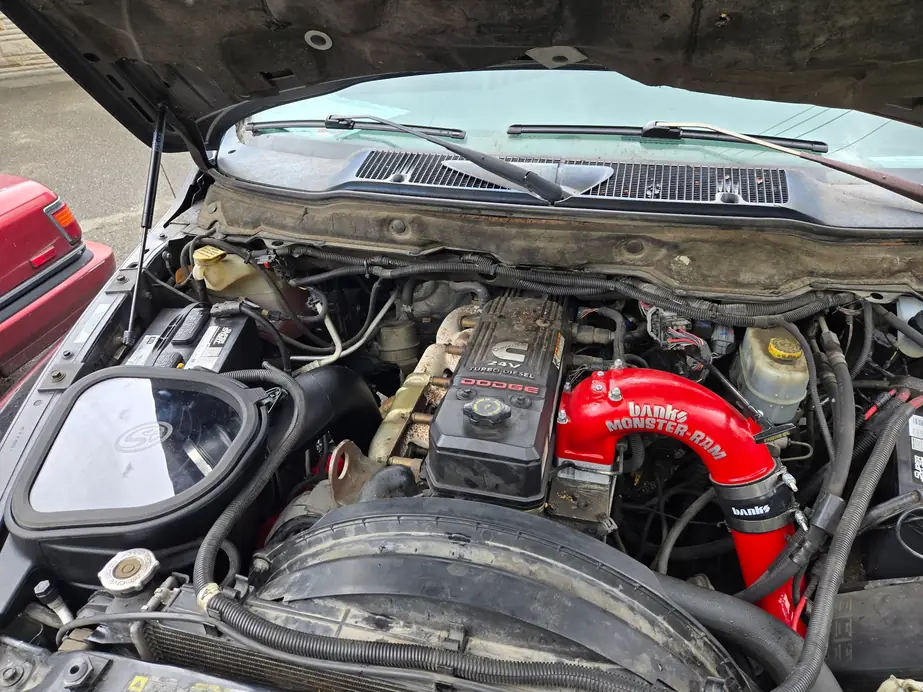
Work trucks in the Columbia Basin earn their keep. They pull trailers down farm roads, idle at job sites, haul loads that would make a half-ton think twice, and rack up miles in dust and summer heat. A diesel can take that kind of life, but the parts around the engine take a beating that doesn't show on the dash until something lets go. Here are four areas worth watching on a diesel pickup, and what we look at when one comes into the shop at 1706 W Broadway Ave in Moses Lake.
Seals and leaks: the slow drips that add up
Diesels run hot and hard, and rubber and cork age with heat cycles and vibration. Common leak points include the crankshaft seals, the valve cover gaskets, the differential and axle seals, and the transmission and transfer case seals. A small seep at the rear main seal or a damp differential housing isn't an emergency, but it doesn't heal itself. Oil on a clutch disc makes it slip. Low gear oil in a differential wears out bearings. A leak also tells you where to look: a clean engine with one wet spot is easy to diagnose, while a truck caked in road grime and old oil hides everything.
One Google reviewer who goes by C C wrote that we "Did an amazing job on my Cummins." Their list of work included fixing leaking seals in the crankcase and the differential, and they summed up the result this way: "Pretty much a new 2007 5.9 at this point." That's what chasing every small leak at once can do for an older diesel.
Intercoolers, charge pipes, and boost leaks
On a turbo diesel, the intercooler and the pipes that carry boosted air are easy to overlook. A loose clamp, a split coupler, or a cracked charge pipe lets boost escape before it reaches the engine. The symptoms are a truck that feels flat on hills, black smoke under load, a whistle when you get on the throttle, or fuel economy that quietly slips. Dirt and oil mist inside the piping are worth a look too. A light film is normal on many setups, but a lot of oil can point to something else going on at the turbo.
Aftermarket intercoolers and pipes are common on these trucks, and they need the same attention as the factory parts: tight fittings, couplers seated all the way, and no rubbing against hoses or wiring. The photo above shows a Dodge Cummins turbo diesel engine bay with aftermarket parts, the kind of truck owners around here tend to love and keep for a long time.
Clutches on a manual diesel
Diesel torque is hard on a clutch, and towing makes it harder. A slipping clutch shows up as engine revs rising without the truck picking up speed. Other signs include chatter when you let the pedal out, a grab point that creeps higher or lower in the pedal travel, and trouble getting into gear. The disc isn't always the cause. Hydraulics, a leaking seal behind the clutch, and a worn flywheel surface can all play a part, which is why the seal conversation and the clutch conversation belong together. The same Cummins owner mentioned a "New South Bend clutch and B and M shifter." A strong clutch and a good shifter do change how a truck feels to drive.
Front ends on heavy trucks
A diesel engine is heavy, and all of that weight sits on the front suspension. Ball joints, tie rod ends, control arm bushings, steering linkage, and the track bar wear faster than they would on a lighter truck, especially with a plow, a heavy bumper, or a loaded bed. Warning signs are wandering at highway speed, a clunk over bumps, uneven tire wear, a shimmy, and steering that feels loose. Front end repairs and alignments go hand in hand, because there's no point aligning a truck whose parts are worn out. The settings simply won't hold.
The same reviewer listed a "Complete rebuild of the front end" among the work on their truck. It's a good reminder that on a high-mileage diesel, the front end is often part of the full picture and not a separate problem.
Fleet owners and preventive maintenance
If you run more than one truck, regular checks matter more than any single repair. Reviewer Ben Justesen wrote, "We have taken our fleet and our personal vehicles there." Preventive maintenance is what keeps a fleet on the road. We offer 30,000, 60,000 and 90,000-mile services, and a look at seals, boost piping, the clutch feel, and front end play makes sense whenever a work truck is already in the bay. We also run a shuttle service, and we text updates while your vehicle is being serviced, so the crew isn't left guessing.
Call (509) 765-7863 for a same-day free estimate on diesel repairs. We're ASE-certified, we back our work with a full parts and labor warranty for 12 months, and you can find the details on our diesel repair page under Auto Services.
Total Auto Care, (509) 765-7863
Call (509) 765-7863More articles
Head Gasket Warning Signs and What the Repair Involves
A failing head gasket rarely shows one clear symptom, so here is what to watch for and what the job looks like once the engine comes apart.
Transmission Trouble: Slipping, Late Shifts, Leaks, and Your Options
Most transmissions give you warning before they quit, and knowing the signs helps you choose between a repair, a new unit, or a used one.