Transmission Trouble: Slipping, Late Shifts, Leaks, and Your Options
Most transmissions give you warning before they quit, and knowing the signs helps you choose between a repair, a new unit, or a used one.
October 14, 2026 · 4 min read
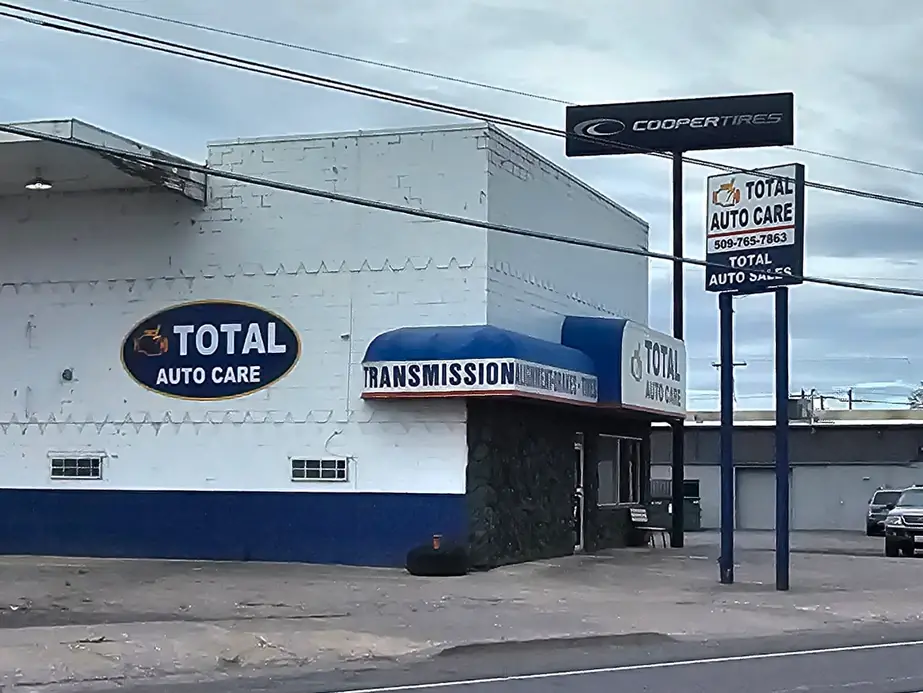
A transmission rarely fails without warning. There's usually a stretch of weeks or months where it tells you something is off, and the drivers who act during that stretch tend to have the easiest time of it. Here's what to watch for, what a shop actually checks, and how to think about repairing the transmission you have versus putting in a new or used one. We sell and install both new and used transmissions at 1706 W Broadway Ave in Moses Lake, so we're not pushing you toward just one answer.
Signs the transmission needs attention
Transmission trouble can feel like a lot of different things. These are the ones that bring people in the most.
- Slipping: the engine revs up but the vehicle doesn't pick up speed the way it should.
- Late or harsh shifts, or a shift that seems to hunt between gears.
- A long pause or a thump when you move the shifter from park into drive or reverse.
- Red or brown fluid on the driveway, or a burnt smell after driving.
- Whining, humming or clunking that changes with gear or speed.
- A warning light on the dash, or a vehicle that goes into a limited mode.
Any one of these is worth a call. Two or three together is a sign to stop putting it off, because heat and friction inside a transmission do more damage with every mile you drive on them.
What gets checked before anyone talks about replacing it
A good diagnosis starts with the simple stuff. The technician checks the fluid level and looks at its condition, since dark fluid, a burnt smell, or fine metal in it tells a story. They scan for stored codes, road test to feel the problem for themselves, and look for leaks at the pan, the cooler lines, and the seals. A lot of shifting complaints come from something outside the transmission's gears: a sensor, a solenoid, a worn mount, a stretched linkage, or low fluid from a slow leak.
That matters because the repair can be small or very large depending on what's found. A leaking cooler line or pan gasket is a very different job from rebuilding internals, and you shouldn't be asked to pay for the second one when the first one is the real problem. That's why the first conversation with us is a free estimate. You can call (509) 765-7863 to set one up.
Repair, new, or used: how to choose
Repairing the transmission you already have makes sense when the problem is isolated, the rest of the unit is in decent shape, and the vehicle is worth keeping. It's often the right call when the fix is external or when only certain components have worn out.
A new transmission gives you a known starting point. Nothing inside it has a history, and it's a reasonable path if you plan to keep the vehicle for years, tow with it, or you simply don't want to wonder what's inside. Ask for the new and used options side by side so you can compare them.
A used transmission can be a practical choice, especially for an older vehicle where a new unit wouldn't make financial sense. The trade-off is that its history isn't fully visible, so condition and warranty coverage matter more than the sticker. That's one reason our 12 month parts and labor warranty is worth asking about whichever route you choose.
The deciding factors are usually the same: how old the vehicle is, how long you plan to keep it, what else it needs, and what you ask of it. A daily commuter and a work truck that pulls a trailer every week may land on different answers. Reviewer Ben Justesen trusts us with a mix of vehicles, including a classic, and wrote that we "helped me with my transmission on a 1950 Ford Coupe." Different vehicles, different decisions.
Keeping heat and fluid under control
Heat is the main enemy of an automatic transmission. Towing, stop-and-go traffic, and summer driving in the Basin all push fluid temperatures up. Using the fluid type your vehicle calls for, following the service schedule in your owner's manual, and fixing small leaks early all help. Catching a small problem early is almost always easier on the wallet than waiting for a big one, whether you drive a family sedan or a work truck.
Getting through the repair
A transmission job can take a few days, and we know that's tough when you need your vehicle. We offer a shuttle service and text updates while your vehicle is being serviced, so you aren't sitting by the phone. Our work comes with a full parts and labor warranty for 12 months and a 12,000-mile nationwide warranty, which matters if you travel.
If your transmission is slipping, shifting late, or leaking, call (509) 765-7863 for a same-day free estimate. You can also see our transmission repair page under Auto Services to learn more about new and used units.
Total Auto Care, (509) 765-7863
Call (509) 765-7863More articles
Head Gasket Warning Signs and What the Repair Involves
A failing head gasket rarely shows one clear symptom, so here is what to watch for and what the job looks like once the engine comes apart.
Keeping a Diesel Work Truck Healthy in the Columbia Basin
Diesel pickups can take hard use, but the parts around the engine wear in ways that rarely show up on the dash until something lets go.