Head Gasket Warning Signs and What the Repair Involves
A failing head gasket rarely shows one clear symptom, so here is what to watch for and what the job looks like once the engine comes apart.
October 14, 2026 · 4 min read
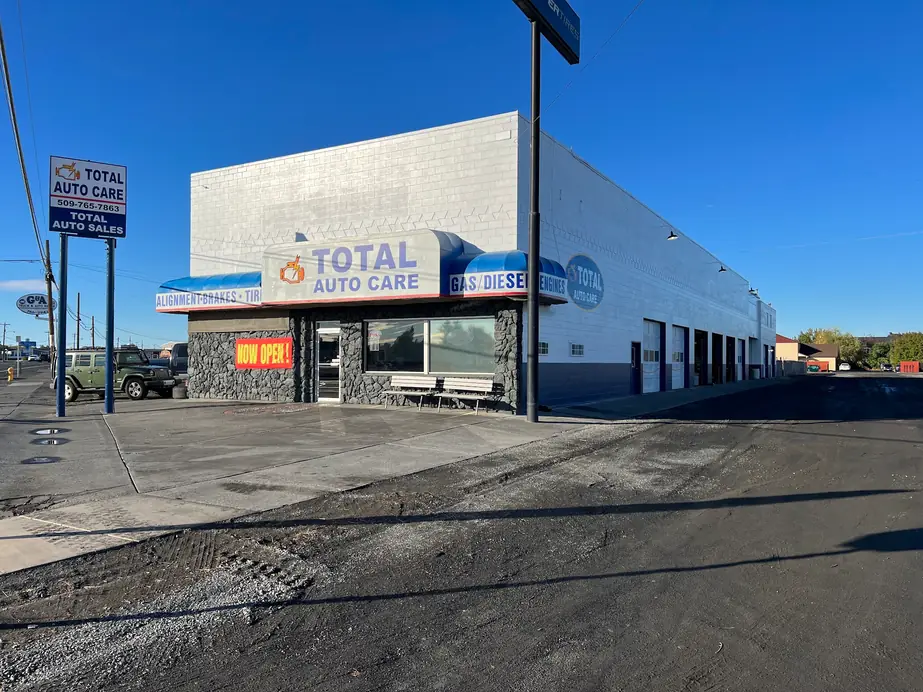
A head gasket sits between the engine block and the cylinder head, and it has two jobs that can't fail. It seals the pressure of combustion inside each cylinder, and it keeps coolant and oil in their own passages so they never mix. When it starts to go, an engine that ran fine last month begins doing things that don't add up. Our shop's line is total auto care from head gaskets to tailpipe, and the head gasket comes first in that sentence for good reason: it's a repair where waiting usually makes the problem bigger.
Signs a head gasket may be failing
No single symptom proves it, but a few of these showing up together should get your attention. Here's what drivers in Moses Lake and across the Columbia Basin tend to notice first.
- Coolant level keeps dropping, but there's no puddle under the vehicle.
- The temperature gauge climbs, especially in traffic or on a long pull.
- White smoke from the tailpipe that smells sweet, which can be coolant burning in the cylinders.
- Oil on the dipstick or under the filler cap that looks milky or tan.
- Bubbles in the coolant reservoir while the engine runs.
- A rough idle or misfire that comes along with any of the above.
Some drivers also notice a weak heater, because air or steam pockets in the cooling system can keep hot coolant from reaching the heater core. It's a quieter clue, but it fits the same picture.
Why a head gasket gets blamed for other problems
Low coolant can come from a bad hose, a weeping radiator, or a failing water pump. Overheating can come from a stuck thermostat, a dead fan, or a plugged radiator. A little white vapor on a cold morning is often just condensation leaving the exhaust. Any of those can look like a head gasket on the surface, and none of them need the engine opened up. That's why a good shop proves the diagnosis before recommending the big repair.
The usual tests are straightforward. A pressure test shows whether the cooling system holds pressure. A combustion gas test of the coolant checks for exhaust gas where it doesn't belong. A compression or leak-down test shows which cylinder is losing its seal. If the cooling system turns out to be the culprit, you've saved yourself a lot of money and a lot of days without a vehicle. We take the time to sort it out, because ASE-certified master technicians and up-to-date diagnostic equipment are only useful when they're pointed at the right problem.
What a head gasket job actually involves
It's a big job because the engine has to come apart to get at the gasket. In general terms, the technician drains the coolant, removes the parts that sit on top of and around the cylinder head, and unbolts the head from the block. On many engines that also means dealing with the timing belt or chain, the intake and exhaust manifolds, and a web of sensors and wiring.
With the head off, the details matter. The mating surfaces on the block and the head have to be cleaned carefully, and the head should be checked for flatness, because a head that has overheated can warp. If it's out of specification, it goes to a machine shop before it goes back on. Head bolts on many engines are designed to be used once, so they're typically replaced, and they get tightened in the right order to the right specification. Skip any of that and a new gasket can fail the same way the old one did.
Then comes everything around it. Fresh coolant, a proper bleed so air doesn't sit in the system, and a look at the parts that took the abuse: the thermostat, the hoses, the radiator cap, and the water pump. If the engine ran hot for a while, it makes sense to ask whether those parts should be replaced while everything is already apart. Since we also handle timing belts, that conversation includes the belt whenever your engine has one.
What happens if you keep driving on it?
Short answer: don't, if the engine is overheating. Heat is what warps a cylinder head and turns a gasket job into a gasket-plus-machine-work job, or worse. Coolant leaking into the oil thins it out and can starve bearings. Coolant leaking into a cylinder can foul spark plugs and, in a bad case, stop the engine cold. Topping off coolant every few days is a way of buying time, not a fix, and it's the pattern that often comes right before a small leak becomes a big one. If the gauge is in the red, pull over somewhere safe and call for a tow instead of limping it home.
One more practical point. Plenty of drivers put this off because they're dreading the bill. A free estimate costs nothing, and sometimes the answer turns out to be a hose or a thermostat instead of the engine itself. Either way you'll know what you're dealing with before you decide anything.
If your truck or car is showing any of these signs, call (509) 765-7863 for a same-day free estimate at 1706 W Broadway Ave in Moses Lake. Our work carries a full parts and labor warranty for 12 months, and you can read more on our engine repair page under Auto Services.
Total Auto Care, (509) 765-7863
Call (509) 765-7863More articles
Keeping a Diesel Work Truck Healthy in the Columbia Basin
Diesel pickups can take hard use, but the parts around the engine wear in ways that rarely show up on the dash until something lets go.
Transmission Trouble: Slipping, Late Shifts, Leaks, and Your Options
Most transmissions give you warning before they quit, and knowing the signs helps you choose between a repair, a new unit, or a used one.